
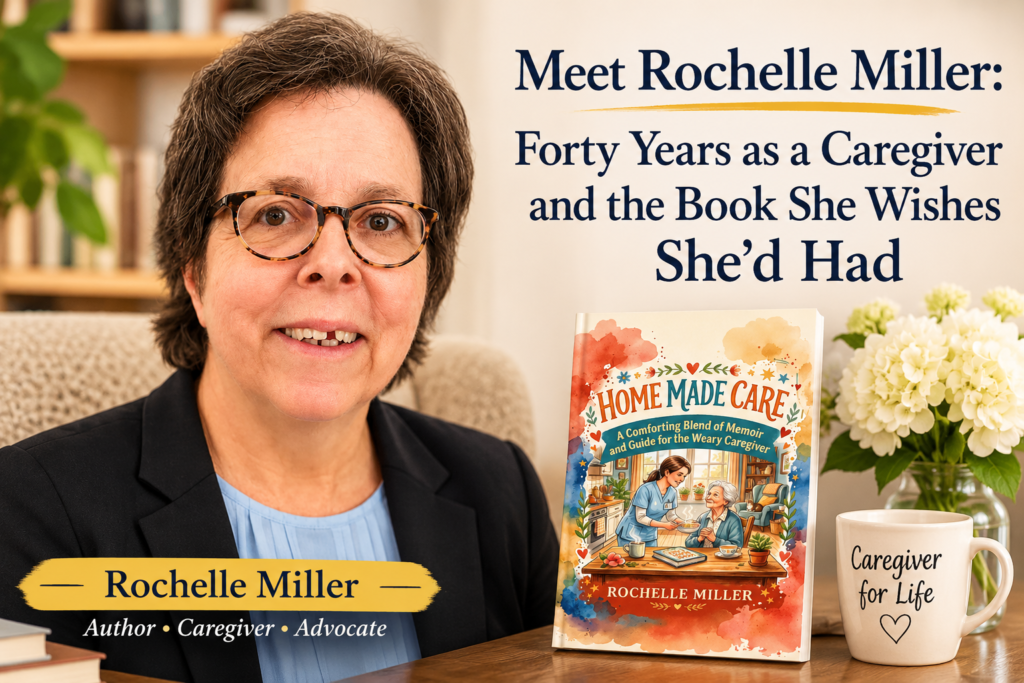
Forty years of paid caregiving leaves a person with plenty of stories, and most of them never appear in a training manual. Rochelle Miller worked as a caregiver for roughly four decades, and she eventually decided to write down what that work taught her. The result is Home Made Care, a collection of real situations paired with practical ways to think about them. The Home Made Care book reads like the guide she wishes she had held at the start of her career, written by someone who learned the job one household at a time.
Rochelle Miller was born Shelly Baccus on September 10, 1956, in Alaska. She grew up with two older brothers and a younger sister, who was born about two years after her.
Her childhood included the 1964 Alaska earthquake. Her family’s home turned out to be the only house in the neighborhood with its indoor plumbing still intact, and the family responded by hosting a spaghetti feed. In her mid-20s, she legally changed her first name to Rochelle. The new name represented the more confident and secure person she was becoming.
When she was nine, the family moved to Oregon and lived on her grandfather’s farm. Her grandfather was born in 1901, and the farm became the place where she learned about responsibility, nature, and animals. Looking after living beings was part of daily life there. It is reasonable to see a thread running from those early lessons to her later work with people, though her career grew out of more than one chapter of her childhood.
Rochelle did not always think of herself as a writer. About 20 years ago, she was swapping stories with friends about their jobs, and those conversations ended with a suggestion: she should write a book. That idea eventually set her on the path toward Home Made Care. There was no single dramatic moment behind it. Her working life simply held plenty of material, and her friends noticed.
Her life outside work is just as varied. She enjoys computer design, photography, and photo editing and restoration. She helps her neighbors and likes playing with her dog, Tucker. Writing books now sits alongside those interests.
Still, caregiving is the center of her story. Rochelle Miller worked as a paid caregiver for approximately 40 years, and that experience is the foundation of the Home Made Care book. Real situations taught her about communication, recognizing personal limits, finding suitable working relationships, protecting her own well-being, and understanding what people receiving care need. Her stories include humor, compassion, grief, burnout, boundaries, and difficult relationships, along with moments of genuine connection. Caregiving, as she tells it, is neither always rewarding nor always hard. It is work made of practical responsibilities and human relationships.
That first-hand perspective gives the book its footing. The authority here comes from experience rather than a title. Rochelle Miller’s account is one caregiver’s story, told plainly, and it makes no attempt to speak for everyone in the profession.
Home Made Care is a passion project rooted in four decades of paid caregiving. Rochelle Miller wrote it in a casual, conversational voice, closer to a colleague telling stories than an instructor giving a lecture. Each story is followed by solutions, suggestions, or ways to approach the issues it raises.
That structure matters. Readers meet a situation first, through a real experience, and then get practical ideas for thinking about similar circumstances in their own lives. The Home Made Care book does not promise to prevent every problem, replace professional training, or provide medical advice. What it offers is perspective from someone who has lived these situations.
The Home Made Care book has ten chapters, and they fall into a few natural groups.
Chapter 1, “A Walk in the Rain with Betty,” centers on a trip home from a mall in the rain after the batteries of an electric wheelchair died at night. Rochelle uses the incident to show why communication matters in caregiving, looking at breakdowns, misunderstandings, and arguments, and at how openness, honesty, and compassion hold good communication together.
Chapter 2, “Finding Your Fit,” moves to the start of a working relationship: assessing yourself, finding an employer who is a suitable match, and asking useful questions before accepting a position. A good arrangement depends on compatibility, realistic expectations, and a clear understanding of responsibilities.
Chapter 3, “The Day Bert Let Me Go,” introduces Bert, a quadriplegic war veteran whose care needs went beyond what Rochelle could provide. The chapter deals with recognizing limitations, accepting rejection, being honest, and listening to intuition. Its central lesson is that not being the right caregiver for one person’s needs does not make someone a bad caregiver.
In Chapter 4, “The Day I Let Me Go,” Rochelle describes caring for an angry woman who took her pain out on caregivers. The chapter introduces abusive behavior and difficult people, and it stresses communicating with honesty and compassion while keeping respect for both the other person and oneself.
Not everything in the book is heavy. Chapter 5, “Some Silly Stories from the Field,” makes room for funny caregiving experiences, a reminder that comic relief belongs in this work too. Chapter 6, “Being Present,” is quieter. It centers on Frank, who received end-of-life care at home with his wife, and reflects on caring for someone with dignity, supporting loved ones, listening, and being present even when words are unnecessary.
The next three chapters take on hard subjects directly. Chapter 7, “Burnout a Deep-Dive,” addresses a frightening incident connected with acute caregiver burnout. It covers recognizing burnout, understanding when it has become serious, considering what to do, and working toward recovery.
Chapter 8, “Abuse: A Deep Dive,” examines situations in which a caregiver becomes abusive. It addresses manipulation, control, and the misuse of power over a vulnerable person, along with warning signs and what can be done.
Chapter 9, “Knowing When to Quit,” describes how physical limitations led Rochelle to recognize that she needed to pursue different work. It also covers the grief that came with that decision and the process of moving through it. Leaving caregiving when circumstances require it can be hard, and the chapter treats it that way.
The list closes with Chapter 10, “Inspirational Stories from the Field,” stories that remind caregivers why they do the work. Coming after the challenges, relationships, humor, and personal lessons of the earlier chapters, it rounds out the picture. Taken together, the chapters show that the Home Made Care book treats caregiving as a full picture: practical, sometimes funny, sometimes painful, and always about people.
Based on its content, the Home Made Care book suits several kinds of readers. Professional caregivers may recognize its situations, from communication breakdowns and difficult relationships to burnout and boundaries. People entering caregiving work can use the chapter on finding the right fit and the questions it raises before accepting a position. Others who are curious about the responsibilities and challenges of caring for people may find Rochelle Miller’s stories a useful look at what the work involves day to day.
These are reasonable audiences based on what the book covers, not promises about outcomes.
Forty years of work leaves a record, and most of it usually goes unwritten. Rochelle Miller chose to write hers down, starting from a casual suggestion by friends about 20 years ago. The stories she tells are specific and unvarnished: a night walk home in the rain, a rejection by Bert, and a decision to leave caregiving when physical limits required it.
The Home Made Care book does not present caregiving as only rewarding or only punishing. It sets the humor, the boundaries, the grief, and the connection side by side, then follows each story with suggestions readers can weigh for themselves. That honesty is what Rochelle Miller offers to anyone who does this work, or is thinking about it.