
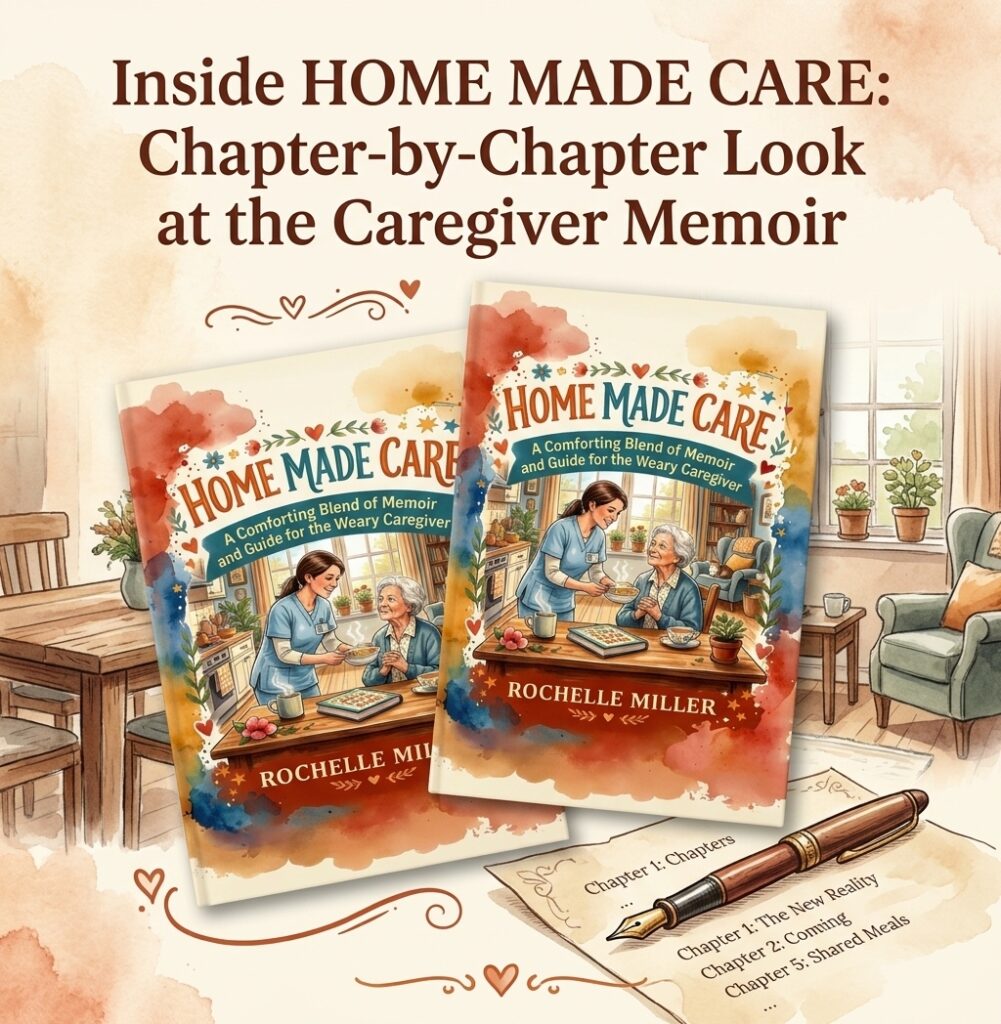
Few people understand caregiving the way those who have done it for decades do. Real-life experiences can teach professional caregivers and people who support loved ones lessons that training manuals rarely cover, such as how to speak up under pressure, where to set a limit, and when to ask for help. That is the idea behind this caregiver memoir by Rochelle Miller.
Drawn from her 40 years as a paid caregiver, the Home Made Care book shares personal stories in a conversational manner. Each story is followed by practical ways to approach the issue it raises. This article walks through the book chapter by chapter, outlining the central themes, practical lessons, and human experiences readers can expect to encounter.
Rochelle Miller worked as a paid caregiver for 40 years, and the stories in the book come from experiences she has carried with her over that time. That firsthand perspective is what gives the Home Made Care book its footing. Rather than offering theory alone, it pairs each story with practical ways of addressing the issue it raises. For readers interested in lessons from caregiving stories, that pairing offers both a real situation and a way to think it through.
The opening chapter sets a demanding tone. Betty’s electric wheelchair batteries died at night, and Rochelle faced a difficult trek from a shopping mall to home in the rain. The weather was only part of the problem. Communication breakdowns, misunderstandings, and emotional outbursts made an already stressful situation harder.
The chapter also introduces the Three Pillars of Good Communication: openness, honesty, and compassion. Together they give caregivers a steady approach to tense moments, and they give the rest of the Home Made Care book a shared vocabulary for caregiver communication.
Early in this caregiver memoir, Chapter 2 shifts from crisis to preparation. It asks readers to consider their abilities, personality, expectations, and professional boundaries through self-assessment, then to identify a suitable employer and ask relevant questions before accepting a position.
The underlying idea is that finding the right caregiving fit benefits everyone involved. A well-matched caregiver is better placed to offer compassionate care, and the person receiving that care gains from the match as well. In the Home Made Care book, this chapter works as a practical checkpoint for anyone considering a new role.
Bert was a quadriplegic war veteran whose care needs exceeded what Rochelle could provide. The chapter uses that experience to highlight the importance of recognizing personal and professional limitations. It explores honesty with oneself and with the care recipient, listening to one’s inner judgment, and handling rejection constructively.
Its most reassuring point may be that being unsuitable for one particular caregiving situation does not make someone a bad caregiver.
Here Rochelle describes her experience with an angry woman who directed her pain toward the people caring for her. The chapter introduces the topic of abuse and the challenges of working with difficult people.
It stresses maintaining caregiver boundaries, recognizing harmful behavior, and speaking truth with kindness and respect for both the care recipient and oneself. By tying these ideas back to the Three Pillars of Good Communication, the Home Made Care book shows how openness, honesty, and compassion apply even when emotions run high.
After heavier material, Chapter 5 offers comic relief. Humor plays a real role in the caregiving profession, and lighthearted experiences provide a welcome contrast to emotionally demanding situations. The chapter reflects the book’s purpose of sharing honest experiences from the field, and it reminds readers that laughter and respect for the people in one’s care can coexist.
This chapter follows Rochelle’s care of Frank as he approached the end of his life at home with his wife. It focuses on dignity, emotional presence, and listening, including understanding when silence helps more than words.
It also makes clear that caregiving involves supporting loved ones and family members as well as meeting practical needs. In this caregiver memoir, the chapter shows why being present during vulnerable moments matters so much.
Rochelle recounts a frightening experience of acute burnout, and the chapter focuses on recognizing warning signs, responding appropriately, and recovering. It acknowledges the emotional and physical demands that can accumulate in caregiving work and encourages readers to notice their own limits and seek appropriate support.
Because burnout does not look the same for every caregiver, readers can use the chapter as a prompt for reflection on their own caregiver self-care. For anyone weighing the emotional demands of caregiving, the Home Made Care book approaches this subject with candor.
Chapter 8 takes on a difficult subject: caregivers who abuse the vulnerable people in their care. It explains how manipulation, control, and misuse of power can appear in caregiving relationships.
The emphasis is on recognizing harmful behavior, understanding how serious abuse is, and considering appropriate steps when abuse is suspected or identified. For anyone involved in caring for vulnerable adults, whether as a professional or a family member, recognizing caregiver abuse is a responsibility, and this chapter keeps that responsibility in view.
Rochelle’s physical limitations eventually led her to consider a different line of work. The chapter discusses recognizing the body’s signals, assessing personal capacity, and acknowledging the grief that can come with leaving a profession.
It presents the decision to stop caregiving as a thoughtful response to changing circumstances rather than a personal failure, and it focuses on processing the transition and moving forward. Readers asking when to leave caregiving will find that the Home Made Care book treats the question with respect.
The final chapter gathers stories meant to remind caregivers why they chose this work. It turns toward the meaning, connection, and sense of purpose that can emerge from caregiving experiences, closing this caregiver memoir on a hopeful note after chapters about burnout, abuse, and leaving the profession.
Honest discussion of caregiving realities is not always easy to find. Communication, burnout, boundaries, abuse, and end-of-career decisions are topics many people avoid, yet they shape daily life for caregivers and the people they support. Reading about them through a caregiver memoir gives readers a way to reflect on their own situations without having to learn every lesson firsthand. The Home Made Care book invites that reflection by pairing personal stories with practical ways of approaching the issues they raise.
Across its ten chapters, the book returns to a handful of themes: communication, compassion, professional boundaries, burnout, presence, and knowing when it is time to move on. Family caregivers, professional caregivers, and general readers curious about caregiving may all find something relevant here, especially those facing questions about fit, limits, or self-care.
Anyone who values personal experience paired with practical reflection may find this caregiver memoir worth exploring, and the Home Made Care book offers a thoughtful place to begin.