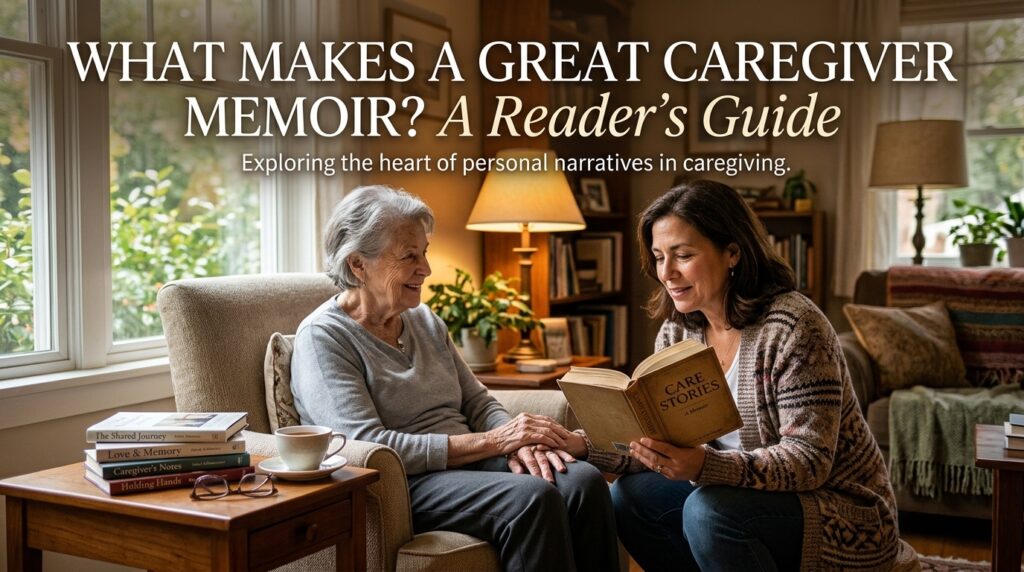
A caregiver memoir tells the story of looking after another person, whether that person is a parent, a spouse, a patient, or a stranger who became a friend. These books can be tender, funny, hard to read, and deeply useful, often all in the same chapter. This guide explains what separates a strong book from a forgettable one, how to choose one that fits your life, and which titles deserve a place on your shelf, starting with a collection of stories from forty years of paid caregiving.
At its core, a caregiver memoir is written by someone who has done the work of care, either at home or in a professional setting. The writer shares real events in the first person, and the reader sees the days as they were lived: the late calls, the small victories, the mistakes, and the quiet moments that no chart records.
A caregiving memoir differs from a medical guide because it starts with a person, not a condition. It also differs from a general memoir because the relationship between giver and receiver drives the story. The best examples show both sides with respect. The person receiving care is never reduced to a diagnosis, and the person giving care is never reduced to a saint.
I have spent years writing about books and working with authors, and I have seen how differently readers approach this genre. Some pick up a caregiving memoir because they are in the middle of the work and want to feel less alone. Others are preparing for it, or remembering it. A good book meets each of them where they are. The picks below were chosen for honesty, clarity, and usefulness, and I describe each from its own premise. Always read a sample before buying, because a book that helps one reader may not suit another.
Several traits show up again and again in a good caregiving memoir, and in the books readers recommend to each other.
A strong caregiver memoir also leaves room for the reader. It does not tell you how you must feel. It shows what one person felt and lets you compare.
Think about where you are right now. If you are exhausted and in the thick of it, short chapters and a warm voice may help more than a long, heavy narrative. If you are a professional caregiver, a book written by someone who did the same work may speak to daily situations you already know. If you lost someone recently, look for a story that treats grief with patience.
Length and tone matter too. Some readers want humor mixed with sorrow, and others want a plain, quiet account. When you open a caregiving memoir in a bookstore, read the first page and a page from the middle. If the voice feels trustworthy in both places, it is likely a good match.
The titles below cover family care, professional care, and the loss that often follows. Start with whichever setting is closest to your own.
Rochelle Miller worked as a paid caregiver for forty years, and this book grew from a long wish to write down what she saw. She describes it as a passion project, and it reads like a casual conversation with the reader. She shares stories that have stayed with her for decades, and after each one she offers ways of handling the issue it raises. The problems in these stories are ones that many people in her line of work will face, so the book works as both a personal account and a practical companion. It belongs at the top of any caregiver memoir list for professional caregivers, and it also helps family members who want to understand the work from the inside.
Published in 1999, this is the author’s account of caring for his wife, the novelist Iris Murdoch, as Alzheimer’s disease changed her. Bayley writes with affection and dry humor, and he does not hide how confusing and lonely the days could be. It remains one of the most cited examples of a spouse’s caregiving memoir.
Cartoonist Roz Chast tells the story of her aging parents in a mix of drawings, photographs, and text. She covers the move out of their longtime home, the cost and confusion of care, and her own mixed feelings. The humor makes the sadness easier to carry. As a visual caregiving memoir, it is a good pick for readers who are caring for parents who resist help.
O’Rourke, a poet and critic, wrote this book after her mother died of cancer. It follows the illness and the grief that came after, and it pays close attention to the odd practical details of loss. It suits readers who are looking for a thoughtful, literary caregiver memoir about mourning.
Sheehy, a journalist and author, writes about caring for her husband, the editor Clay Felker, during his cancer treatment. She blends her own story with lessons about the stages caregivers pass through and the choices they face. Readers who want a personal account with guidance built in will find it useful.
Jane Gross, a longtime New York Times reporter, writes about caring for her aging mother and the surprises of the American system for older adults. The book is a caregiving memoir that combines personal storytelling with reporting. It is a fitting choice for adult children who are sorting out insurance, housing, and family disagreements.
A few simple questions can turn a caregiving memoir from a good read into a useful one. Which moment in the story felt most familiar to you? What did the writer do that you would want to try, and what would you handle differently? Did the book change how you see the person you care for, or the person you once cared for?
Keeping a small notebook beside you helps. Many readers copy down a single sentence from each chapter that stays with them. Over time, those lines become a record of what the book gave you.
People who give care often have little time to talk about what it costs them or what it teaches them. A well-made caregiver memoir fills that gap by saying what many readers have felt and never said. Whether you start with Rochelle Miller’s collected stories or one of the other titles above, choose a book that sounds honest, read a few pages, and see whether it keeps you company. A good caregiving memoir often does.